JP-10
High-Density Synthetic Fuel
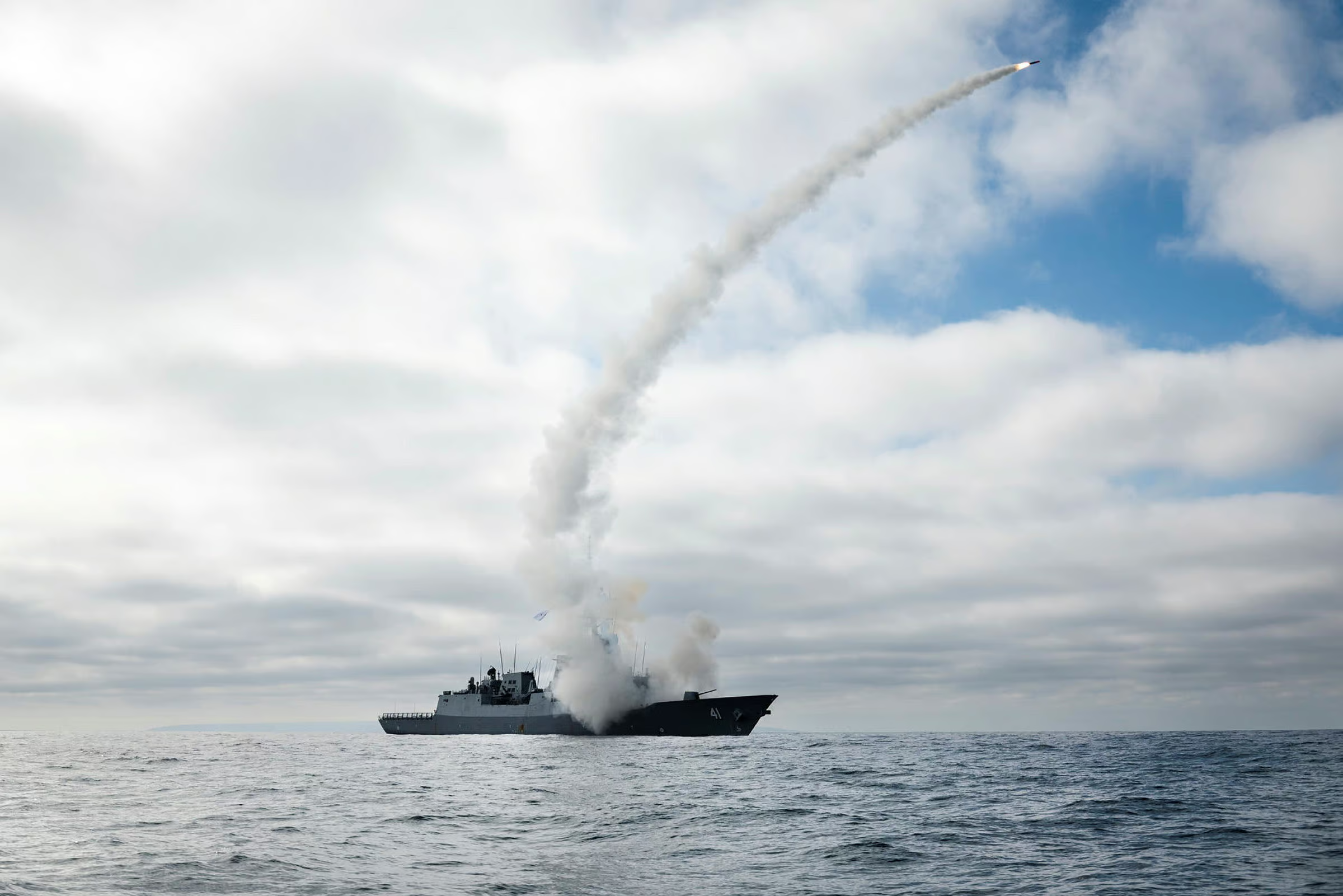
Exo-tetrahydrodicyclopentadiene (THDCPD) — the world's premier high-density fuel for cruise missiles, stand-off weapons, and volume-limited UAVs. Density 0.937–0.951 g/mL; ~20% more energy per litre than conventional jet fuel.
JP-10 Full Technical Specifications
Per MIL-DTL-87107 — High Density Hydrocarbon Fuel
| Property | Requirement | Method |
|---|---|---|
| Specification | MIL-DTL-87107 | — |
| Chemical Composition | Exo-THDCPD ≥97 wt% | GC |
| Density at 15°C | 0.937–0.951 g/mL | ASTM D4052 |
| Flash Point (min) | 54°C (130°F) | ASTM D56 |
| Freezing Point (max) | −79°C (−110°F) | ASTM D2386 |
| Net Heat of Combustion | ≥139,400 BTU/gal | ASTM D4809 |
| Viscosity at −40°C (max) | 12 cSt | ASTM D445 |
| Distillation Initial BP | 170–200°C | ASTM D86 |
| Distillation 90% (max) | 210°C | ASTM D86 |
| Copper Corrosion | Class 1 | ASTM D130 |
| Thermal Stability (JFTOT) | ≥325°C | ASTM D3241 |
| Total Sulfur (max) | 3 mg/kg | ASTM D5453 |
| Endo/Exo Isomer Ratio | Exo ≥97% | GC-MS |
| Color | Colorless to pale yellow | Visual |
For a fixed tank volume, JP-10 carries ~20% more energy
Volumetric energy density comparison:
Why density matters for missiles
Cruise missiles carry fuel in a tightly constrained airframe. At 0.94 g/mL, JP-10 packs ~19% more energy into the same tank volume vs. JP-8. This directly translates to range: a Tomahawk running JP-10 has longer reach without increasing airframe size.
Platform Applications
JP-10 is the fuel of choice wherever energy density is the primary design constraint
Cruise Missiles
BGM-109 Tomahawk, AGM-158 JASSM and similar subsonic stand-off weapons
Air-Launched Missiles
Long-range air-to-surface missiles where fuel volume is tightly limited by airframe geometry
Tactical UAVs
High-endurance unmanned vehicles with small airframes requiring maximum range per volume
Target Drones
Aerial target systems used in live-fire training and weapons testing
Research Platforms
Hypersonic and scramjet research vehicles requiring high-energy fuels
Decoy Systems
Air-launched decoys and jamming platforms with compact propulsion systems
What Makes JP-10 Unique
Single-Component Synthetic Fuel
Unlike JP-8 or Jet A-1, which are complex mixtures of hundreds of hydrocarbon compounds, JP-10 is essentially a single molecule: exo-tetrahydrodicyclopentadiene (exo-THDCPD). This purity gives it extremely predictable and consistent physical properties — critical for precision weapon systems.
JP-10 is produced by the hydrogenation of dicyclopentadiene (DCPD), with the exo isomer required at ≥97% purity. The bicyclic ring structure is responsible for its exceptional density; the compact, strained ring packs more carbon atoms per unit volume than linear or monocyclic hydrocarbons.
Thermal Stability
JP-10's JFTOT breakpoint ≥325°C means it can be used as a coolant/heat sink in advanced propulsion systems before combustion — a dual role that makes it attractive for future high-speed platforms.
JP-10 vs JP-8 — Quick Comparison
| Property | JP-10 | JP-8 |
|---|---|---|
| Composition | Single compound | ~200 compounds |
| Density at 15°C | 0.94 g/mL | 0.80 g/mL |
| Vol. Energy | 142,000 BTU/gal | 119,000 BTU/gal |
| Flash Point | ≥54°C | ≥38°C |
| Freezing Point | ≤−79°C | ≤−47°C |
| Primary Use | Missiles / UAVs | Aircraft / vehicles |
| Spec | MIL-DTL-87107 | MIL-DTL-83133 |
JP-10 Global Supply & Sourcing Network
Reliable JP-10 supply from certified distributors and strategic refinery partnerships
JP-10 Supply Chain & Refinery Partnerships
JP-10 remains a specialized niche market. Global production is limited to a handful of government-approved refineries that maintain MIL-DTL-87107 compliance. SUAT Fuels maintains long-term supply agreements with certified JP-10 refineries and distributors across North America, Europe, and Asia-Pacific.
Our supply network ensures:
- Global reach: Access to multiple refinery production schedules and inventory reserves
- Quality assurance: Third-party COA inspection at refinery, with full MIL-DTL-87107 traceability
- 24/7 logistics: Emergency AOG delivery protocols for defense and government programs
- Export compliance: Customs documentation, ITAR licensing, and secure shipping for sensitive orders
Lead times: Typical delivery 5–15 business days depending on quantity and destination. Emergency expedited supply available for government priorities.
Why Choose SUAT as Your JP-10 Distributor
- ✓ Licensed distributor of MIL-DTL-87107 compliant JP-10
- ✓ Direct refinery relationships with government-approved suppliers
- ✓ Multi-regional sourcing reduces single-point-of-failure risk
- ✓ Full documentation: Certificate of Analysis, origin verification, chain-of-custody
- ✓ ITAR & export control compliance for defense shipments
- ✓ 24/7 supply reliability backed by strategic inventory management
How to Purchase JP-10 — Procurement Process
Streamlined ordering for defense programs, government agencies, and qualified commercial operators
Request a Quote
Contact SUAT with your required volume, delivery location, and timeframe. Our procurement team responds within 4 hours.
Supply Agreement
We review your authorization status (government, defense, or commercial) and prepare a formal supply agreement with ITAR compliance.
Production & QA
Our refinery partners produce or allocate JP-10 stock, with parallel testing for MIL-DTL-87107 compliance. Full CoA issued.
Logistics & Delivery
Secure tank truck or maritime shipment arranged with customs clearance. Real-time tracking provided throughout delivery.
Qualified Buyers for JP-10 Purchase
JP-10 requires buyer authorization. SUAT supplies to:
Government & Defense: US DoD, allied NAT forces, government weapons programs
Prime Contractors: Lockheed Martin, Boeing, Raytheon, General Dynamics
Research & Test: University aerospace labs, government test ranges
Commercial Operators: Registered UAV manufacturers, flight-test facilities
JP-10 Frequently Asked Questions
What is the density of JP-10 fuel?
JP-10 has a density of 0.937–0.951 g/mL at 15°C (approximately 0.94 g/cm³). This is ~18% denser than JP-8's average of ~0.80 g/mL. The high density is the primary reason JP-10 is selected for volume-limited missile airframes — it allows significantly more energy to be stored in the same tank volume.
What is JP-10 used for in military aviation?
JP-10 is the fuel of choice for cruise missiles (BGM-109 Tomahawk), stand-off air-launched weapons (AGM-158 JASSM), tactical UAVs, target drones, and hypersonic research platforms. Its ultra-high volumetric energy density enables maximum range and endurance in compact, fuel-constrained airframes. It is not used in manned military aircraft, which use JP-8.
What does MIL-DTL-87107 specify?
MIL-DTL-87107 is the US military performance specification for high-density synthetic hydrocarbon fuel (JP-10). It defines minimum purity (exo-THDCPD ≥97%), density limits (0.937–0.951 g/mL), flash point (≥54°C), freezing point (≤−79°C), thermal stability (JFTOT ≥325°C), copper corrosion class, and sulfur content (≤3 mg/kg).
Is JP-10 supply reliable?
JP-10 supply is limited by global refinery capacity, but SUAT Fuels provides 24/7 reliable supply backed by strategic partnerships with government-approved refineries and multi-regional sourcing. We maintain inventory buffers and direct refinery relationships to guarantee fast fulfillment (5–15 business days standard; emergency expedited available).
How do I purchase JP-10 as a distributor or contractor?
Contact SUAT Fuels directly at +34 684 742 834 or sales@suatfuels.com. Our procurement team will verify your organization's authorization status, prepare a supply quote, and manage all compliance documentation (MIL-DTL-87107 CoA, ITAR, export controls). Minimum purchase quantities and delivery lead times will be discussed based on current inventory and refinery schedules.
Can SUAT supply JP-10 globally?
Yes. SUAT is a licensed global distributor of JP-10 through certified refinery partners and logistics networks. We handle export documentation, ITAR licensing, customs clearance, and secure cold-chain delivery to authorized government, defense, and commercial customers worldwide. Contact our defense sales team to verify availability for your region.
What are JP-10 characteristics compared to JP-8?
JP-10's key characteristics: single compound (not a blend), 0.94 g/mL density (~20% higher than JP-8), 142,000 BTU/gal volumetric energy, −79°C freezing point (vs −47°C JP-8), ≥325°C thermal stability (enabling heat-sink use). JP-10 is optimized for missiles and UAVs; JP-8 is for aircraft and vehicles.
How does JP-10 density affect missile range?
A missile's fuel tank volume is fixed by airframe design. At 0.94 g/mL, JP-10 stores ~19% more mass (and energy) than JP-8 (0.80 g/mL) in the same volume. For a subsonic cruise missile like Tomahawk, this 19% energy increase directly extends range — enabling longer standoff distances without redesigning the airframe.
JP-10 Supply — Defense & Government Programs
SUAT Fuels provides JP-10 under strict quality protocols with full MIL-DTL-87107 certification, CoA documentation, and export compliance management.